
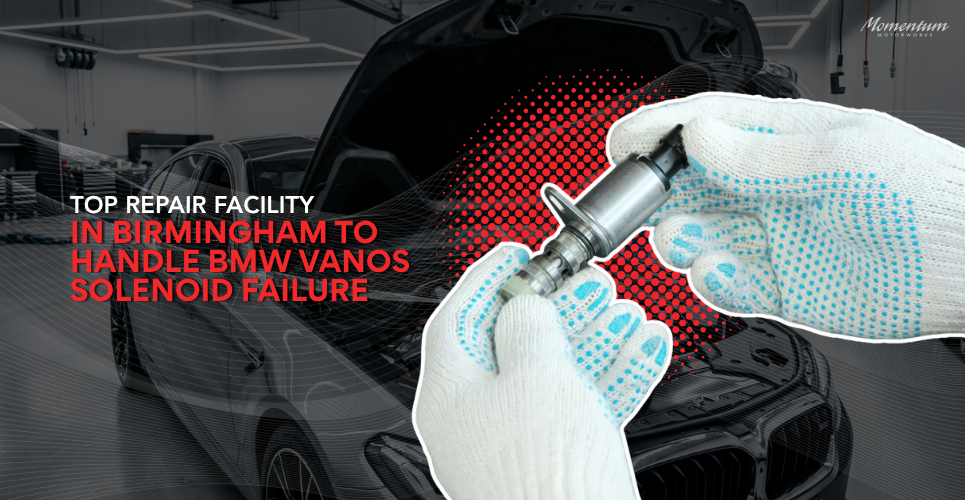
BMW’s Vanos variable valve timing system is a key contributor to the brand’s reputation for smooth, responsive power delivery. By continuously adjusting camshaft timing based on engine speed and load, Vanos allows the engine to produce strong torque at low RPM while still delivering high-revving performance at the top of the tachometer. But when a Vanos solenoid fails, that precision timing control is lost — and drivers quickly notice a change in how their BMW feels and performs. At Momentum Motorworks in Birmingham, Alabama, our ASE-certified BMW specialists diagnose and repair Vanos solenoid failures on a daily basis.
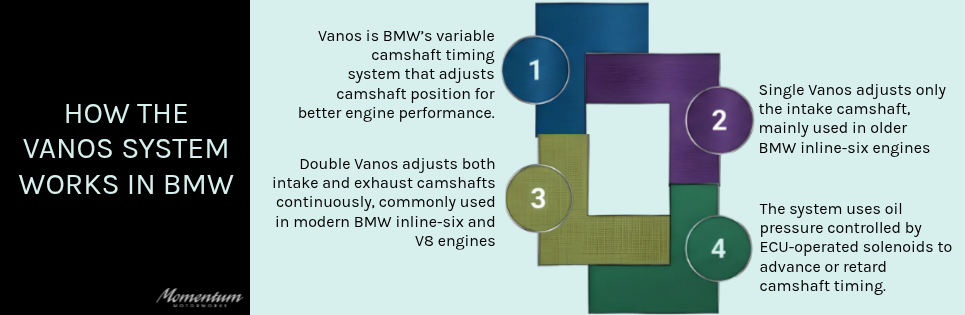
How the Vanos System Works
Vanos is BMW’s proprietary system for variable camshaft timing. On single Vanos systems (found on older inline-six engines), only the intake camshaft is adjusted. On Double Vanos systems (common on all modern BMW inline-six and V8 engines), both the intake and exhaust camshafts are continuously variable. The system uses oil pressure delivered through solenoid-controlled valves to advance or retard the camshaft positions.
The Vanos solenoids are small electromagnetic valves that receive commands from the engine control unit (ECU) and regulate oil flow to the Vanos actuators. They are located on the front of the cylinder head and are bathed in engine oil. Over time, these solenoids can clog with oil sludge, develop electrical failures, or wear internally — causing them to stick in one position or respond sluggishly to ECU commands.
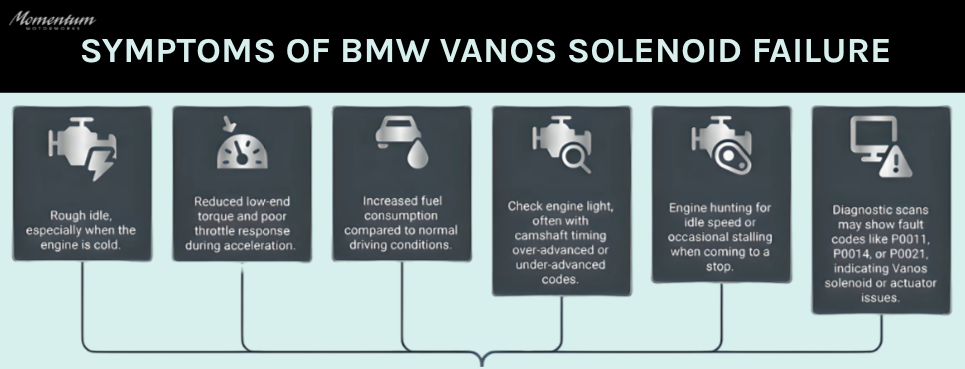
Symptoms of BMW Vanos Solenoid Failure
The most common symptoms include rough idle, particularly when the engine is cold, reduced low-end torque and throttle response, increased fuel consumption, and a check engine light with codes for camshaft timing over-advanced or under-advanced on the intake or exhaust bank. Some drivers also notice the engine hunting for idle speed or occasionally stalling when coming to a stop. On vehicles with severe sludge accumulation, the Vanos actuators themselves can become stuck, compounding the symptoms.
A diagnostic scan at Momentum Motorworks will typically reveal specific fault codes — such as P0011, P0014, or P0021 — that directly implicate the Vanos solenoids or actuators, allowing our technicians to confirm the diagnosis before recommending parts.
Our BMW Vanos Service Process
Our repair process begins with a thorough scan, an inspection of the solenoid screens for sludge blockage, and in many cases a live data test of solenoid activation response. We often find that BMW owners who have not adhered to strict oil change service intervals have sludge-clogged solenoid screens as the root cause — in those cases, cleaning or replacing the screens and the solenoids resolves the problem. For vehicles with clean oil maintenance histories, solenoid replacement alone typically corrects the fault.
Address: 2075 Old Montgomery Hwy, Birmingham, AL 35244
Phone: (205) 403-4626
Website: momentummotorworks.com
Frequently Asked Questions
Q: What BMW models are most affected by Vanos solenoid failure?
A: Vanos solenoid issues are most commonly seen on BMW models from the late 1990s through the 2010s equipped with the M54, N52, N54, N55, and S65 engines. Both Double Vanos and single Vanos-equipped vehicles can experience solenoid problems.
Q: Can I fix Vanos solenoid failure myself?
A: Solenoid replacement is accessible to experienced DIYers on some BMW models, but it requires proper diagnostic tools to confirm the fault before replacing parts. Without a scan tool capable of reading Vanos-specific fault codes and live data, it is easy to misdiagnose the cause.
Q: How important is oil change frequency for preventing Vanos problems?
A: Very important. BMW’s Vanos system relies on clean, properly flowing engine oil. Sludge from extended oil change intervals is one of the leading causes of solenoid screen blockage and Vanos actuator sticking. We recommend following BMW’s specified oil change intervals strictly.
Q: Will cleaning the Vanos solenoids fix the problem?
A: In some cases, cleaning the solenoid screens removes the blockage and restores normal function. In others, the solenoid itself has worn internally and needs replacement. Our technicians evaluate both conditions before recommending the appropriate repair.